
How to Prepare Your Pelvic Floor for Birth
Preparing your pelvic floor for birth should focus on relaxing and lengthening the muscles, not just strengthening. Too much pelvic floor tightness is going to work against your body when you push—and increase your risk of tearing. During the pushing phase, you want to use your abdominals to push down while relaxing your pelvic floor.
It is SO important to know how to contract and relax the pelvic floor before labor and delivery. Wherever you are in your pregnancy, you can start pelvic floor birth prep right now.
What Happens to the Pelvic Floor During Pregnancy?
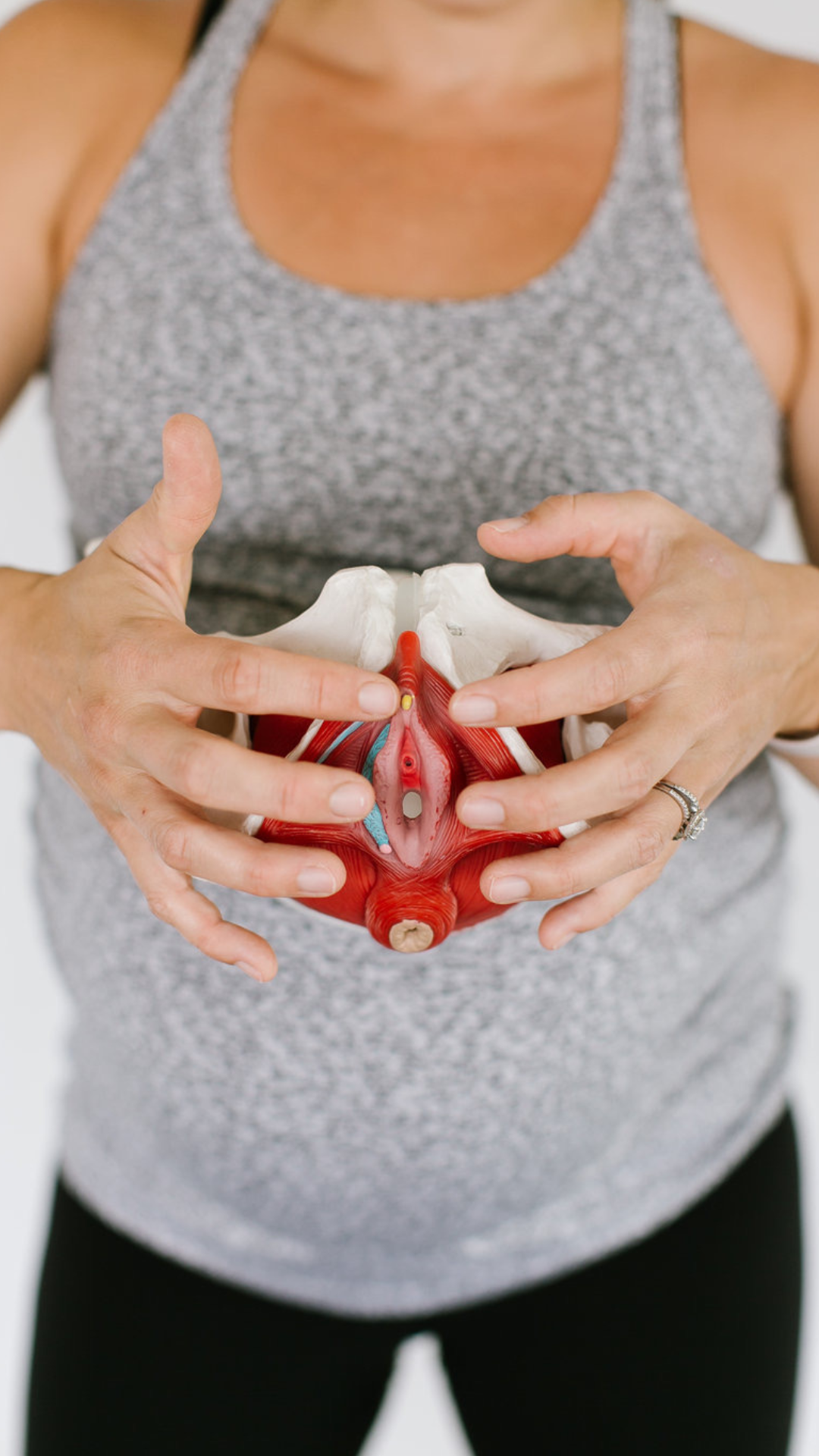
Your body is designed to give birth, but it does need preparation. Unfortunately, modern life often doesn’t support a relaxed pelvic floor. Women spend long hours sitting at work, driving, or feeding babies. This more sedentary lifestyle leads to a tight, compressed, and imbalanced pelvis.
As a physical therapist, I see tight, imbalanced pelvises daily that fall into two categories:
Left-to-right balance: Pregnancy, birth, or habits like lopsided carrying can tighten or weaken one side of your pelvic floor. This can lead to tight hips, feeling disconnected from your core, and trouble activating your pelvic floor muscles.
Front-to-back balance: Many women—especially active or athletic women—carry tension in the back of their pelvic floor. This is also the most common area for tearing during delivery.
If you’re pregnant and experiencing sciatica, hip tightness, hamstring pain, or pelvic floor symptoms, your body is trying to tell you something. These are often signs of an imbalanced pelvis and pelvic floor, and heading into labor with this imbalance is something we don’t want to ignore.
Can Pelvic Floor Tightness Affect Labor and Delivery?
Yes, having pelvic floor tightness can affect labor and delivery—and research supports this! When giving birth, the pelvic floor is the exact area that needs to be soft, mobile, and able to lengthen.
Limited pelvic mobility and increased pelvic floor tension are associated with:
Longer or stalled labor
Increased resistance during pushing
Suboptimal fetal positioning
Clinically, when the pelvis and pelvic floor are balanced and mobile, baby has a much easier path through the birth canal.
Do You Need to Strengthen Your Pelvic Floor for Labor?
Pelvic floor birth prep is about creating a system that can lengthen, relax, and coordinate. This is because during labor, your pelvic floor doesn’t need to hold—it needs to let go. However, what most women don’t realize is that you still need strength to relax the pelvic floor.
If your pelvic floor is weak, the muscles will grip, spasm, or create more tension. This happens because a weak pelvic floor doesn’t feel stable under pressure.
So, yes, it’s still important to strengthen the pelvic floor. However, we strengthen the pelvic floor muscles so they can fully release when it matters most during labor.
3 Pelvic Floor Skills You Need for Labor
1. Contraction (Building Strength for Control)
Gaining some awareness of your pelvic floor can be powerful. Without strength, your body cannot relax—and it will compensate with tension.
To contract your pelvic floor:
Think of your pelvic floor as a diamond shape: Front to back (pubic bone to coccyx) and side to side (from sit bone to sit bone)
As you exhale, gently lift the pelvic floor upward and inward toward the back of your pubic bone
This builds control so you can fully release during labor.
2. Relaxation (The Most Important Skill)
Your pelvic floor must be able to fully relax and lengthen during labor.
To practice relaxing the pelvic floor:
Place the heel of your hand on your pubic bone with your fingers pointed backward toward your spine
Or, you can place a blanket/towel touching in that saddle region (this helps you feel your muscles come back down)
Inhale deeply into your rib cage and belly
While you inhale, allow your pelvic floor to drop and soften downward
This helps create space for your baby during delivery.
3. Bulging / Bearing Down for Pushing
As you push your baby out, you want to work WITH your contractions. During a contraction, your abdominals create pressure—generating a pushing force to get your baby out. While this is happening, your pelvic floor must open and lengthen downward to get your baby out.
This should feel like:
Gentle bearing down: Your pelvic floor needs to be bulging downward (this should feel like taking a poop)
Not lifting: You want your pelvic tissue to come downward toward your feet
Not squeezing: This only creates extra resistance and tension
If you push against a tight pelvic floor, you increase resistance, risk of tearing, and difficulty with delivery.
Best Pelvic Floor Exercises to Prepare for Birth
Labor and delivery is a very physical task, and your muscles need to be strong. To really benefit from muscle strengthening, you need to start exercising during pregnancy at least 4-6 weeks before labor and delivery. Focusing on hip mobility and pelvic positioning around week 32 can help you reduce pelvic floor tension, improve alignment, and prepare your body for delivery.
The Expecting & Empowered Pregnancy Program can help walk you through the best ways to prepare your body for labor, with exercises like:
Pelvic mobility
Hip balance
Pelvic floor coordination
Perineal Massage for Labor Preparation
Located between your genitals, the perineum is a patch of sensitive skin, ligaments, and muscles that help support the pelvic floor.
You can begin perineal massage at 34 weeks. (Talk with your provider if you have a high-risk pregnancy.) Perform for 5-10 minutes, 4 times per week. During perineal massage, focus on stretching the back of the vaginal wall (the most common area for tearing).
Perineal massage can help prepare the area for labor by:
Increased blood flow
Improved tissue elasticity
Reduced risk of tearing and episiotomy
Prepare Your Pelvic Floor for Labor the Right Way
Preparing your pelvic floor for birth empowers you to work with your body during labor. Training your pelvic floor muscles to relax and lengthen, building strength and balance with exercise, and completing perineal massage prepare your pelvic floor for a smoother delivery. Pelvic floor birth prep also helps you avoid tension—and instead learn to open and respond—when it matters most.
JOIN THE EXPECTING AND EMPOWERED APP!
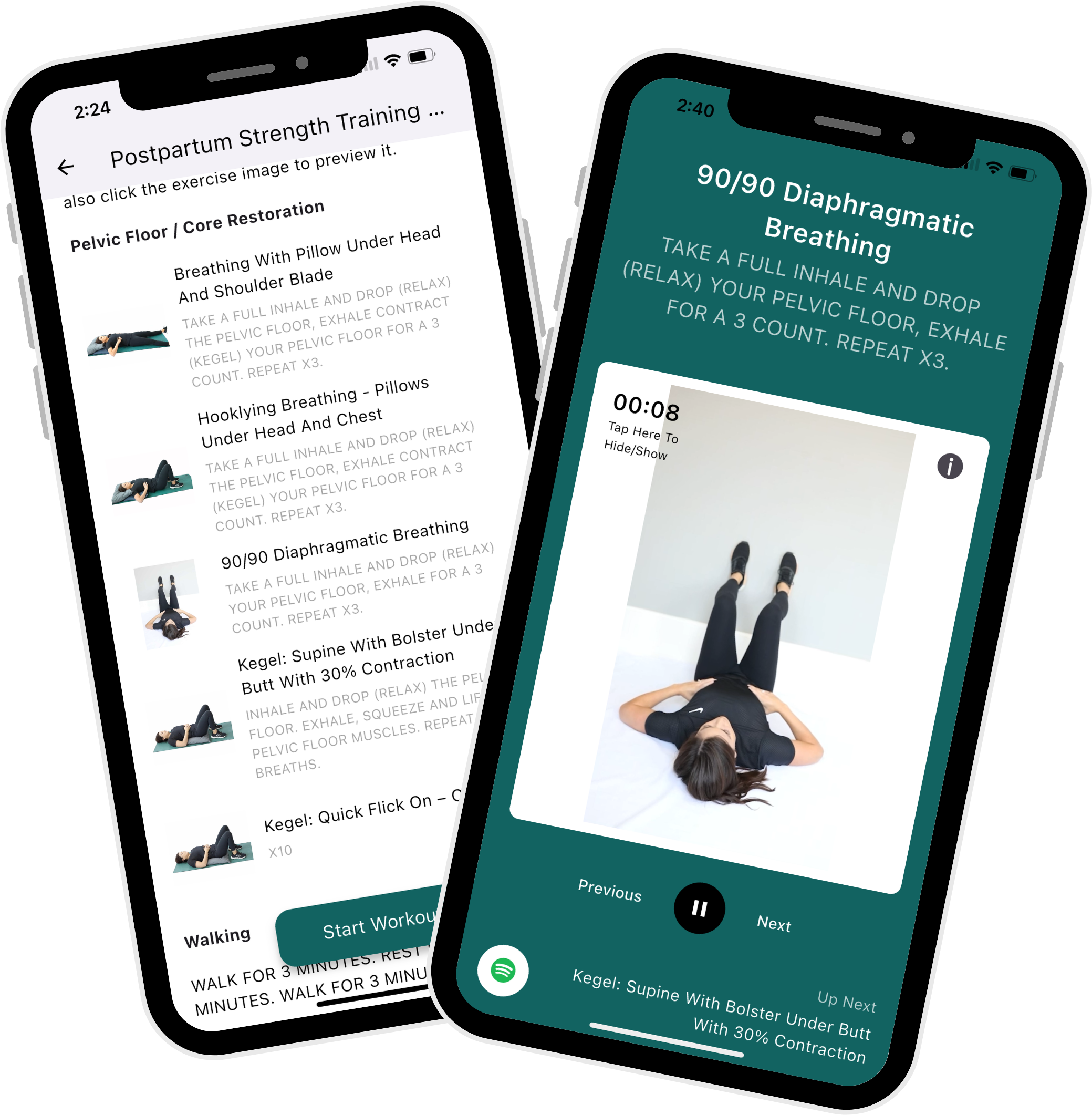
Now that you understand why it’s so important to prepare your pelvic floor for labor, the E+E app can help you prepare the right way. Inside the Expecting & Empowered Pregnancy Program, we follow along your pregnancy journey each week and guide you step-by-step through:
Pelvic floor training
Strength and mobility
Labor preparation
Postpartum recovery
Workouts are targeted to help you build a balanced pelvic floor and prepare your body for birth! You’ll feel confident, strong, and ready for your birth experience.
Need more help?
SOURCES
Bordoni B, et al. (2023). Anatomy, Abdomen and Pelvis, Pelvic Floor. https://www.ncbi.nlm.nih.gov/books/NBK482200/
Culleton-Quinn E, et al. (2022). Elite female athletes' experiences of symptoms of pelvic floor dysfunction: A systematic review. https://www.ncbi.nlm.nih.gov/pmc/articles/PMC9477953/
Grimes WR, et al. (2023). Pelvic Floor Dysfunction. https://www.ncbi.nlm.nih.gov/books/NBK559246/