
How to Return to Running Postpartum
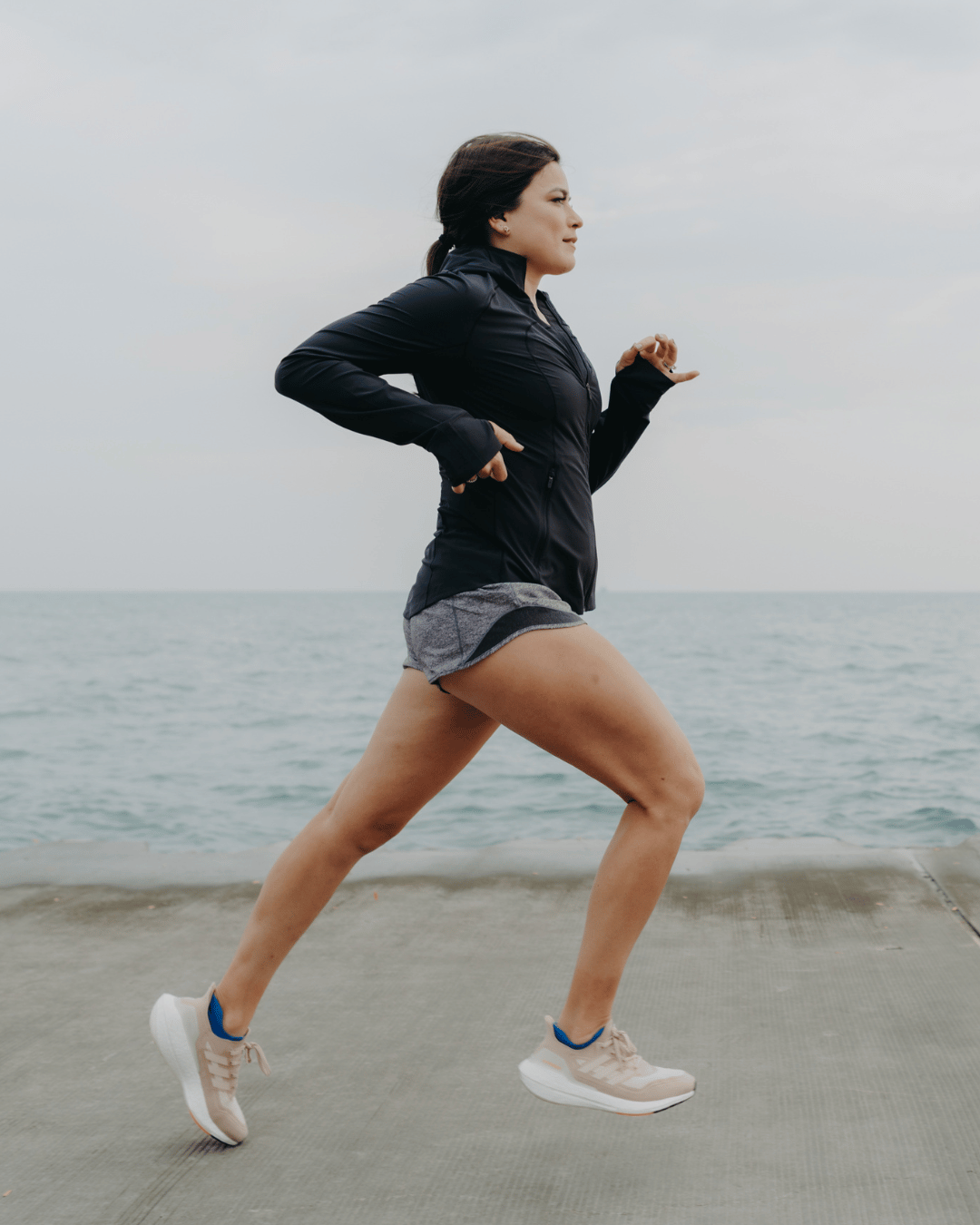
Returning to a running routine may seem as simple as hitting the pavement. But it's important to build up that base when you return to running postpartum; otherwise, your entire foundation will crumble!
Pregnancy and birth already change your body, and most pregnant runners take an extended break from running. In fact, a study on pregnant runners found nearly 69% don't run in the third trimester. Add at least 6 weeks to return to exercise, and you likely haven't run for almost 5 months!
No matter how many marathons or 5Ks you've run in the past, returning to running postpartum means starting from scratch. But it's still possible to come back FASTER and stronger after baby if you do it in a smart and progressive sequence! The key is to focus on strength, build up your dynamic ability, connect with your core (pelvic floor, breathing, abdominals, and back), and have a program for progression!
Rebuild Strength
Before you start running, we recommend taking an extra 6 weeks to work on strength training after you're cleared to exercise. That means most women can return to running around 12 weeks postpartum. Running is considered a high-impact exercise, and is three times more vigorous than walking. As you run, your quads, hamstrings, calves, and glutes constantly absorb force and propel you forward. We need these muscles to help, so it's essential to rebuild strength.
I love focusing on sports-specific exercises to build up strength. Since running is a single-leg activity, we need to train our muscles similarly. For about a year, postpartum women may also deal with an increase in the lateral pelvic tilt while running. This means that one side of the hip may be tilted slightly higher, creating tightness in the glutes and hips. To correct this, we need to wake up our hip muscles that help stabilize our pelvis during running.
Exercises:
RDL's
Side-lying forward leg raise
Speedskaters
Connect with Your Core
Running is a whole-body workout, and your core and pelvic floor are extremely important to your running mechanics. Often, moms don't have a great connection to their core after having a baby. So, we need to wake up the brain-to-body connection to help rebuild motor patterns!
First, you need to reconnect to your abs. I love isometric (ISO) ab exercises because you can't cheat when holding static positions for extended periods. After that, we want to work our core in a diagonal pattern, which is how our core moves while we run. For example, the right oblique works with the left groin (AKA anterior oblique sling) when you run.
Exercises:
Iso abs: Push
Iso abs: Cross
Diagonal core x 8
Quadruped pelvic tilts
Quadruped hip extension
TA single leg drop
Work on Dynamic Movements
Your body has to be able to absorb shock when you run. And just like strength, you need to train your body to absorb the impact of running. This is where dynamic movement comes in. Running itself is a dynamic movement, meaning it moves your muscles and joints through their full range of motion. Focusing on dynamic exercises can teach your muscles and joints to work together so you can take on the impact of running.
I love progressing dynamic exercises from a counter to a chair and then to the ground before moving to upright and more complex ones.
Exercises:
Elevated plank hops
Elevated mountain climbers
Plank hops x 12
Bunny hops x 8
Speedskater hops x 14
Follow a Program for Progression
Progressing your workouts' intensity is essential to avoid injury and improve your physical performance postpartum. The best way to ease into running is to follow an expert-backed program! The Expecting and Empowered App was created by myself—a women's health PT and a certified personal trainer to offer you a safe and personalized plan to hit the ground running.
Inside the app, you'll find everything you need to safely build up your strength and running base—including our Postpartum Strength Program, Empower Your Core Program, and Return to Running Program.
The 12-week Return To Running Program is specifically designed to help you progress to running safely—while improving your stamina, form, and running abilities. Before you start, we'll have you take a running assessment to get a personalized readiness score. This creates a tailored exercise plan to help you work on specific issues and ensure your body is ready to run.
Motivational instructions and prompts will guide you through two weekly runs to help you get back into a running routine. Even if you've never run before, the Return To Running Program is a great place to start.
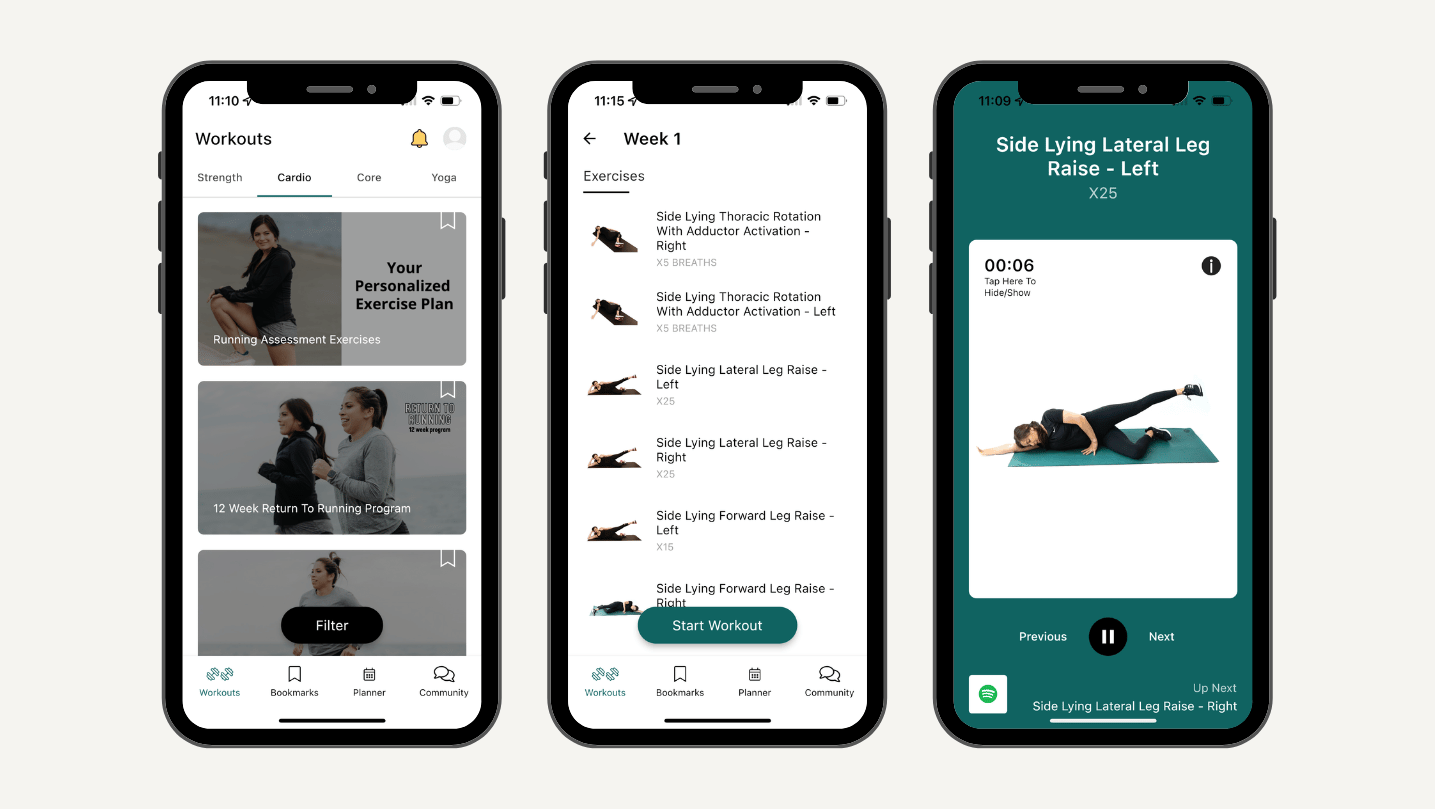
Ready to run? Learn more about the Expecting and Empowered App, and check out our blog posts on running form and jogging with a stroller.
SOURCES
Selman R, et al. (2022). Maximizing recovery in the postpartum period: A timeline for rehabilitation from pregnancy through return to sport. https://www.ncbi.nlm.nih.gov/pmc/articles/PMC9528725/
Swain DP, et al. (2016). Impact forces of walking and running at the same intensity. https://journals.lww.com/nsca-jscr/fulltext/2016/04000/impact_forces_of_walking_and_running_at_the_same.19.aspx
Tenforde AS, et al. (2015). Running habits of competitive runners during pregnancy and breastfeeding. https://www.ncbi.nlm.nih.gov/pmc/articles/PMC4332642/