
If you're nearing the end of your pregnancy, you've probably asked yourself: "Am I having real contractions or Braxton Hicks?" Figuring out the difference between Braxton Hicks and labor pains is one of the most common (and confusing!) parts of late pregnancy.
The truth is that your body practices for labor before the real thing kicks in. These "practice contractions" are called Braxton Hicks contractions. And, while Braxton Hicks can feel uncomfortable, they aren't the real deal.
Let's break down the difference between Braxton Hicks vs. labor contractions—and how you can figure out what's going on in your body.
🤰 What Are Braxton Hicks Contractions?
Braxton Hicks are your body's way of preparing for labor. Think of them as warm-up contractions. They may start as early as the second trimester, but they tend to be more noticeable in the third trimester.
Braxton Hicks are often triggered by physical activity, a full bladder, sexual activity, or not drinking enough water. You may also notice them more at the end of the day.
Signs of Braxton Hicks:
Irregular in timing and don't form a consistent pattern
Do not get stronger or more painful over time
Stay the same length (they don't gradually lengthen)
Often stop with movement, like walking or shifting positions
Usually felt in the front of your belly or lower abdomen
🩺 What Do Real Labor Contractions Feel Like?
True labor contractions signal that your body is starting the process of giving birth. These contractions help labor progress through cervical changes—like dilation (opening) and effacement (thinning). Eventually, you'll fully dilate to 10 centimeters, and it's time for delivery.
Signs of Real Labor Contractions:
Regular and consistent timing (they come at steady intervals)
Gradually increase in intensity and become more painful
Get longer over time
Continue no matter what—even if you move, rest, or hydrate
Often start in your lower back and move toward the front of your belly (like waves)
🤷♀️ How to Tell the Difference Between Braxton Hicks and Early Labor Contractions
Sometimes, it's hard to tell the difference between Braxton Hicks and labor pains—especially if this is your first pregnancy. Even labor can be mistaken for Braxton Hicks. Here are three quick ways to tell whether you're dealing with Braxton Hicks vs. early labor contractions:
💧 1. Drink Water
Dehydration is a known trigger for Braxton Hicks. If you drink a glass or two of water and the contractions fade away, you're likely not in labor yet.
🚶 2. Move Around
Change positions. Go for a short walk. If the contractions stop or slow down, they're probably Braxton Hicks. But if they continue or intensify? It might be go time.
🛁 3. Take a Warm Bath
A warm bath is not only relaxing, but it can also help you distinguish between real and false labor. Braxton Hicks contractions typically subside in warm water, while real labor contractions continue to intensify.
👶 How Do I Know If I'm in Labor or Having Braxton Hicks?
If you're feeling unsure if you're having Braxton Hicks or labor contractions, trust your instincts—but also use these signs to help guide you. If contractions are getting longer, stronger, and closer together—and don't stop with movement or rest—it's likely the real deal.
Braxton Hicks are a regular and helpful part of pregnancy, but when it's time for real labor, your body will let you know. We also offer the Expecting and Empowered Labor + Delivery Online Course to help prepare you both physically and mentally for birth.
And remember, you don't have to figure it all out alone! Keep your provider in the loop, especially if you're ever unsure about your contractions.
JOIN THE EXPECTING AND EMPOWERED APP
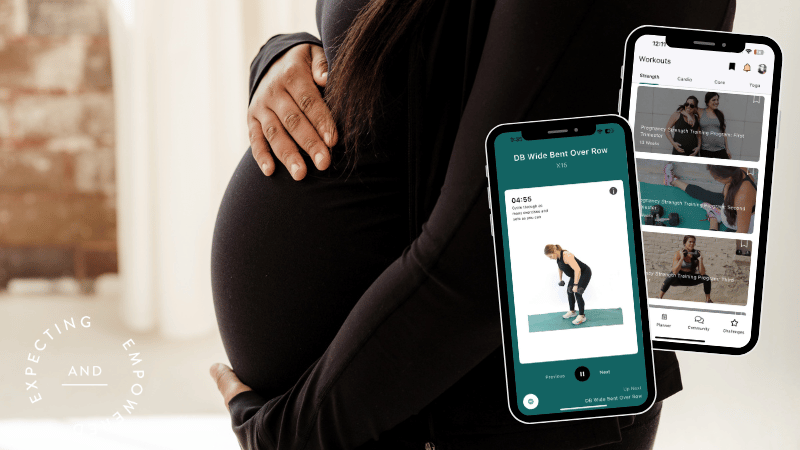
Want to feel more prepared for labor? Our Expecting and Empowered App can help you walk into birth feeling calm, confident, and strong. The app offers trimester-by-trimester guides, birth prep workouts starting at 32 weeks, and expert education to help you prepare. So whether you're having Braxton hicks or real labor contractions, your body and mind will be ready for what comes next.
Sources
ACOG. How to Tell When Labor Begins. https://www.acog.org/womens-health/faqs/how-to-tell-when-labor-begins
Hutchison J, et al. 2025. Normal Labor: Physiology, Evaluation, and Management. https://www.ncbi.nlm.nih.gov/books/NBK544290/
Raines DA, et al. 2023. Braxton Hicks Contractions. https://www.ncbi.nlm.nih.gov/books/NBK470546/